Comparisons
Replacing an old POP ceiling with a stretch ceiling
Cracked, stained or sagging POP? When a stretch ceiling can go below it, what to fix first, and what to expect.
By Skyceil team · · 1 min read
Editorial draft — general guidance awaiting review by the Skyceil team. Confirm details for your project with us.
Many homes and offices have POP false ceilings that have cracked along joints, stained after a leak or started to sag. Breaking them down is messy. In many cases a stretch ceiling can be installed below the existing ceiling instead.
Signs your POP ceiling needs attention
- Cracks along board joints or around light fittings
- Yellow or brown water stains
- Flaking paint that keeps coming back
- Sagging sections or loose pieces
Sagging or loose plaster can be a safety issue. Have it checked before any new ceiling is planned.
Can a stretch ceiling go below it?
Usually, yes. Perimeter profiles are fixed to the walls a little below the old ceiling and the membrane is stretched between them. The old ceiling stays hidden in the cavity above. We check the available height, the condition of the walls for fixing, and the position of lights and AC units during the site visit.
What to fix first
- Repair any leak from the slab or plumbing above — a new ceiling will not stop water.
- Make sure loose plaster is secured or removed.
- Decide where lights, fans and AC grilles will go, so openings can be planned.
What changes for you
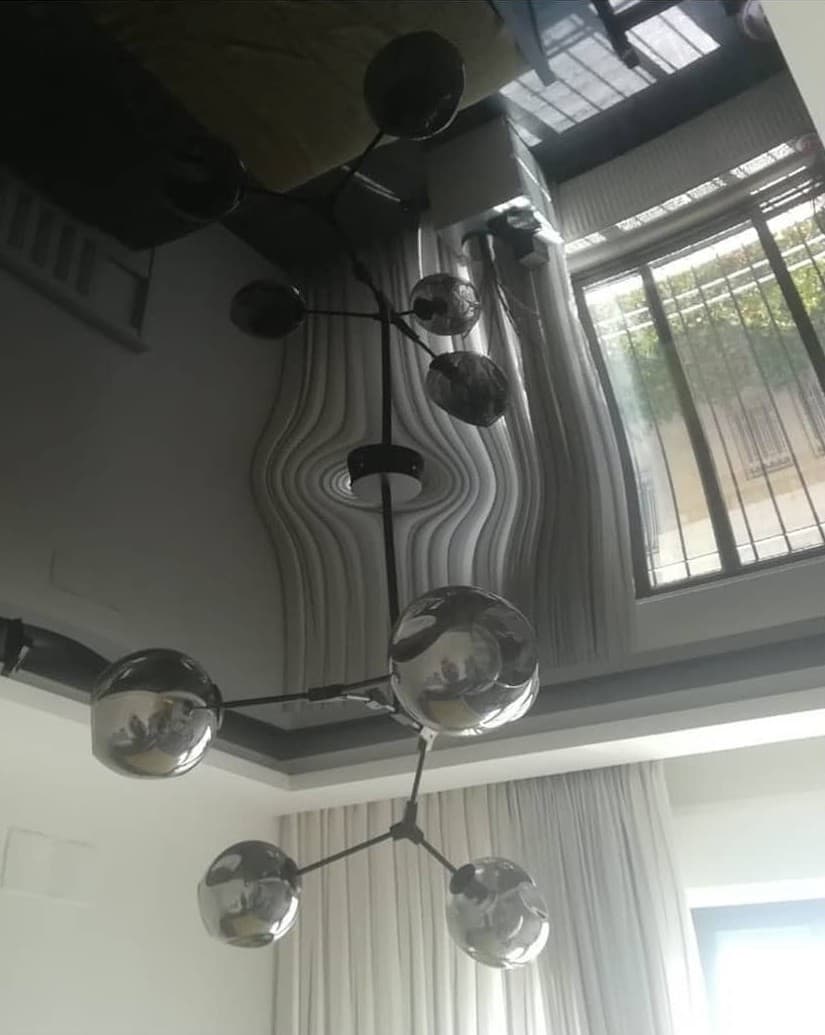
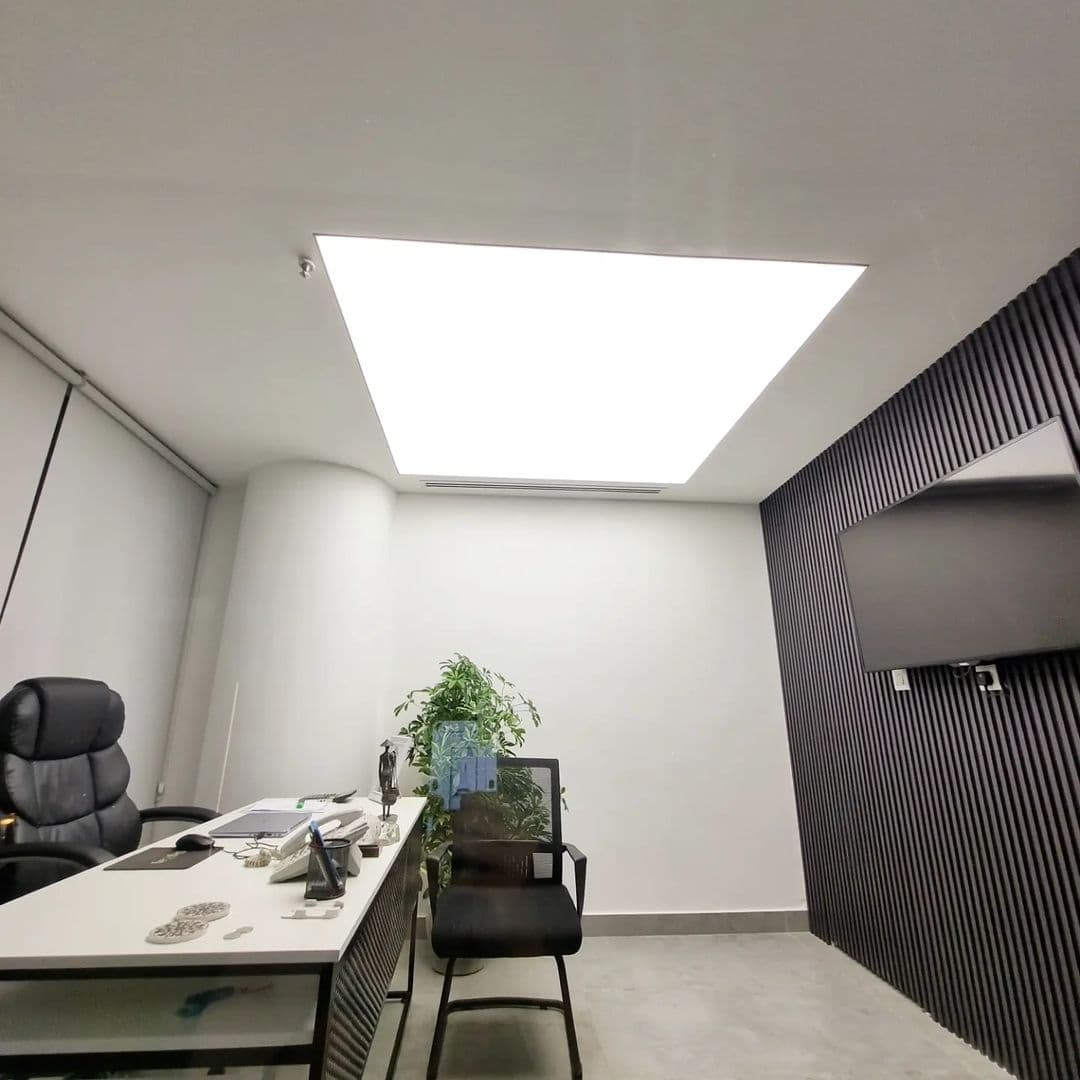
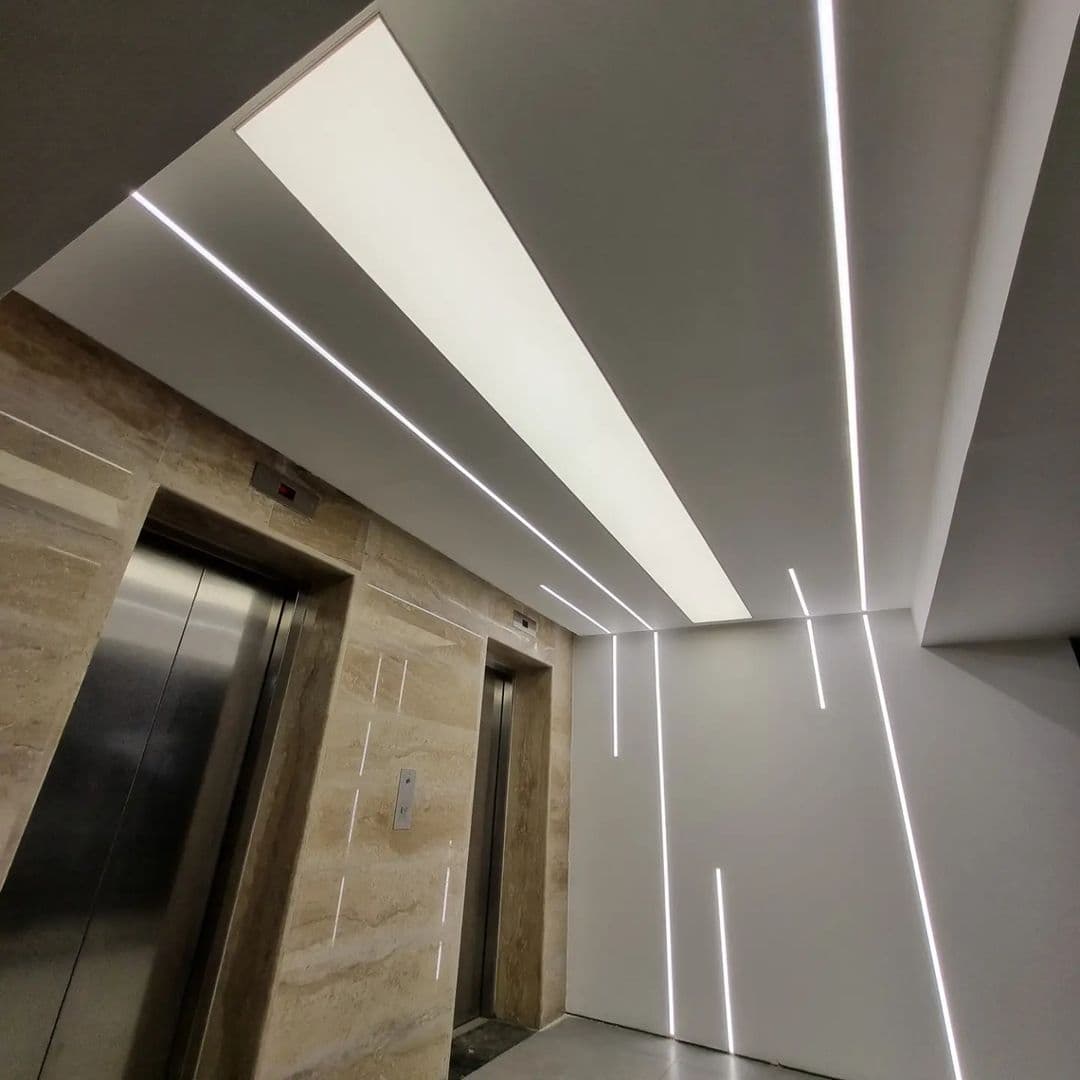
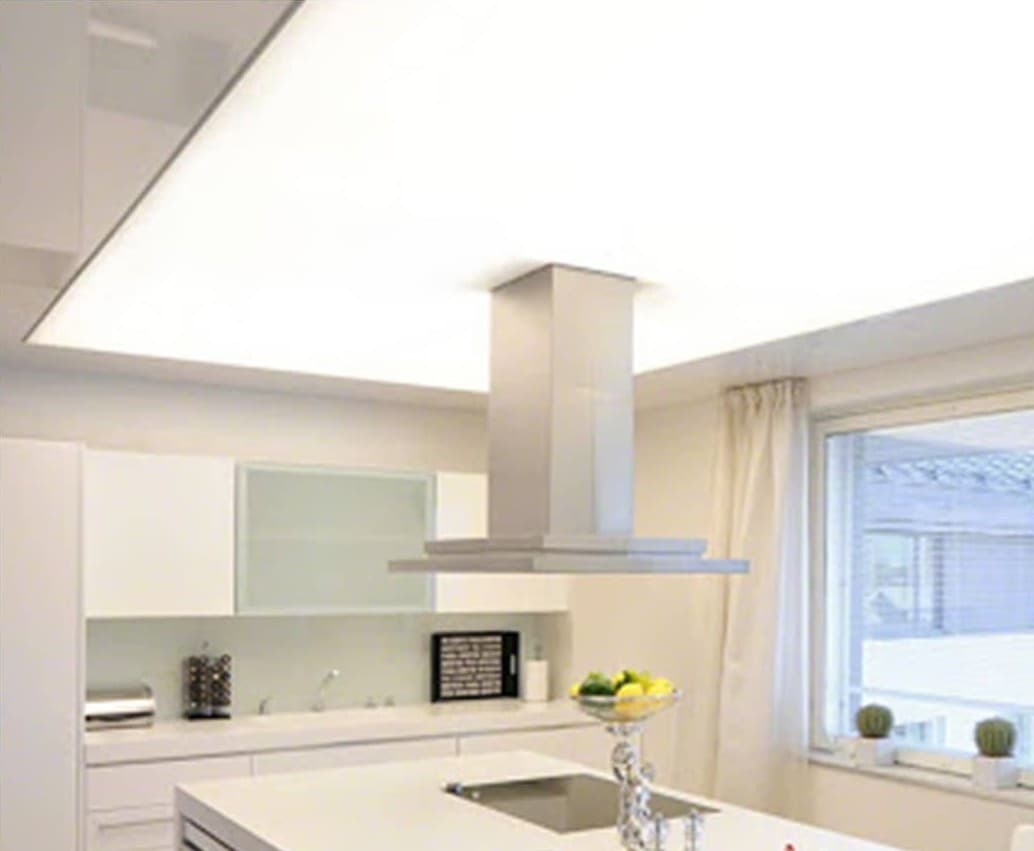
There is no plastering, sanding or painting, so the room is far less disrupted than with new POP work. You also gain options POP cannot give — a backlit panel, a printed sky or a gloss finish.
For a side-by-side comparison of materials, see our stretch ceiling vs POP and gypsum guide.